
FLUX vs Scenario: which one to choose in 2026?

Community ratings, features, pricing and free plans: the complete head-to-head between FLUX and Scenario to find the right tool for your needs.

Screenshot of FLUX
Verified

FLUX

4.6 (203)

FLUX is the family of image-generation models built by Black Forest Labs, the German lab founded by the creators of Stable Diffusion. From FLUX.1 to FLUX.2, these models turn a prompt into high-resolution visuals and edit images from reference pictures. Available through an online playground, an API and open weights, they stand out for their photorealism and some of the most reliable in-image text rendering on the market.

Text to ImagePhoto & Image Generator
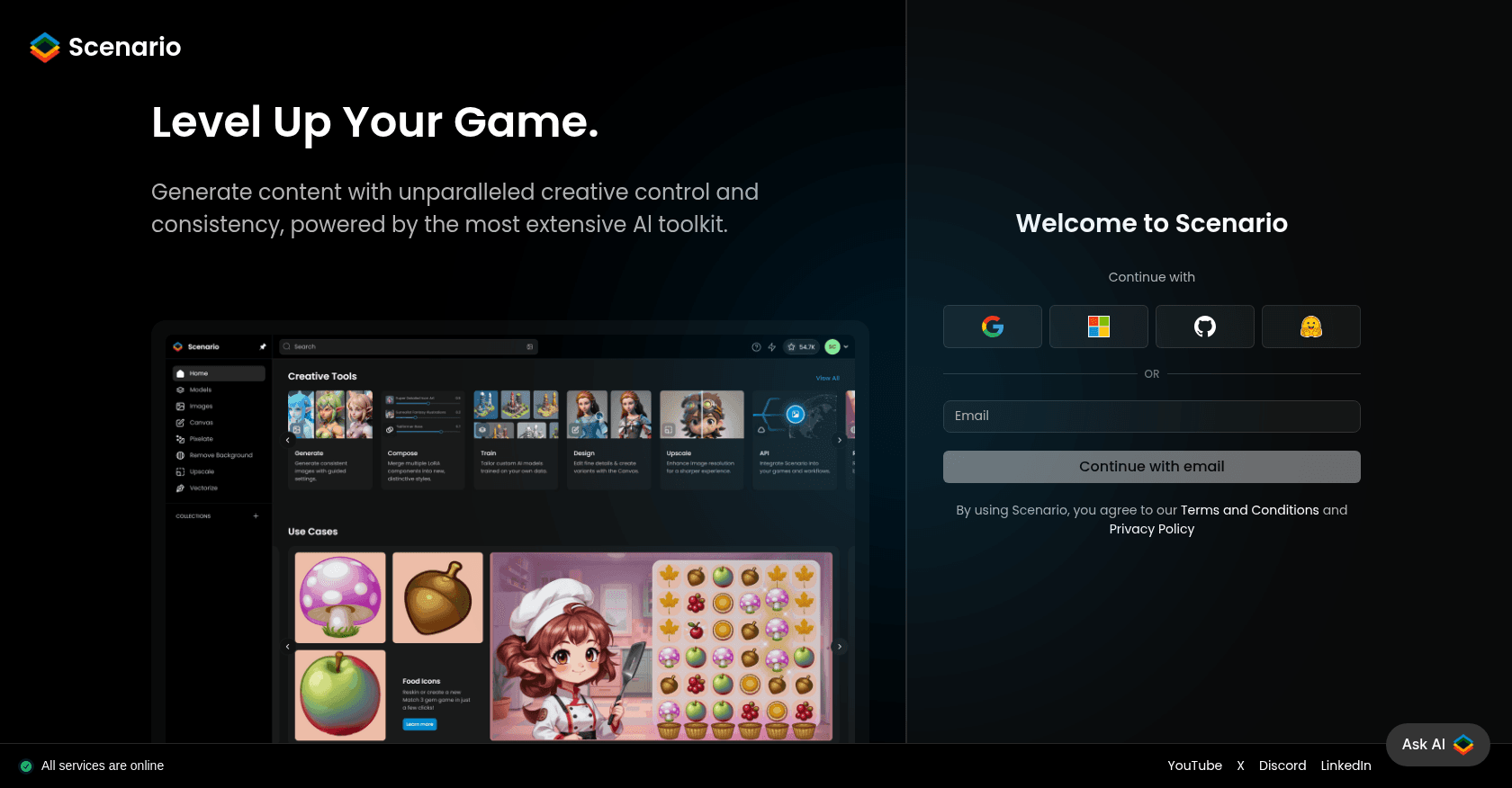
Screenshot of Scenario
Verified

Scenario

4.3 (110)

Scenario is an AI-powered platform designed for generating game assets with consistent creative control. It allows game developers and creators to generate high-quality, custom assets using AI, streamlining the creative process for games.

Photo & Image GeneratorDesign GeneratorArt GeneratorGraphic Design3D Design3D Model Generator

Comparison table

CriterionFLUXScenario
Average rating4.64.3
Number of reviews203110
Free planYesYes
PlansPlayground (free trial), Pay-as-you-go API, Open weightsFree Trial, Pro Plan
CategoriesText to Image, Photo & Image GeneratorPhoto & Image Generator, Design Generator, Art Generator, Graphic Design, 3D Design, 3D Model Generator
Last updatedJuly 8, 2026October 1, 2024

See all tools in these categories: Photo & Image Generator

Our verdict

FLUX or Scenario?

With an average rating of 4.6/5 (203 reviews), FLUX comes out ahead of Scenario (4.3/5, 110 reviews) with our community.

Budget-wise, both tools offer a free plan: you can try them before committing to a paid tier.

Positioning-wise, FLUX stands out in Text to Image, while Scenario focuses on Design Generator, Art Generator, Graphic Design, 3D Design and 3D Model Generator.

Features head to head

FLUX

  • State-of-the-art photorealism and reliable text rendering directly inside images
  • FLUX.2: images up to 4 megapixels and support for multiple reference images
  • Image editing via text instructions and reference images (FLUX Kontext, FLUX.2)
  • Online playground, pay-as-you-go API and open-weight models on Hugging Face
  • A variant for every need: [max] for maximum quality, [klein] for sub-second generation

Scenario

  • AI-driven game asset generation
  • Custom asset creation with consistent style
  • Support for various art styles
  • Templates for quick creation
  • Easy export and integration into game development pipelines

Pricing compared

FLUX

Playground (free trial)

  • Free credits granted when you create an account
  • Limited number of generations, then top up with paid credits
  • Access to the main FLUX models in the browser

Pay-as-you-go API

  • A few cents per image depending on the model and resolution
  • Prepaid credits: 1 credit = $0.01
  • No subscription, billed per generation
  • Commercial usage rights on generated images

Open weights

  • Free download on Hugging Face (FLUX.1 [schnell], FLUX.2 [klein]...)
  • Run locally on your own hardware
  • License depends on the variant: Apache 2.0 or non-commercial use

Scenario

Free Trial

  • Access to basic asset generation tools
  • Limited daily generations

Pro Plan

  • Increased asset generation limits
  • Custom styles
  • Priority access to new features

Prices are indicative and may change — check the official sites for up-to-date pricing.

Frequently asked questions

What is the difference between FLUX and Scenario?

Both tools share the Photo & Image Generator space, but FLUX also covers Text to Image, while Scenario adds Design Generator, Art Generator, Graphic Design, 3D Design and 3D Model Generator.

FLUX or Scenario: which one is rated higher?

FLUX earns the better average rating: 4.6/5 (203 reviews), versus 4.3/5 (110 reviews) for Scenario.

Can you use FLUX or Scenario for free?

Yes: both FLUX and Scenario offer a free plan to get started. Advanced features require their paid tiers.

Other comparisons